Many remarkable organizations work to protect the Arkansas and Gunnison river basin watersheds. They range from state agencies to community collectives to nonprofit organizations, with objectives as varied as fish health to water quality to wildfire mitigation. Blue Elements’ mission is to expand those groups’ impact by supporting them with much-needed, handpicked interns exploring careers or courses of study in watershed health. It’s a win-win arrangement, with host organizations benefitting from critical person power and smarts, and AmeriCorps members gaining hands-on professional experience in their area of environmental interest. Often, these members go on to join their host organization as staff, helping to carry its mission into the future.
Arkansas Headwaters
Recreation Area (AHRA)
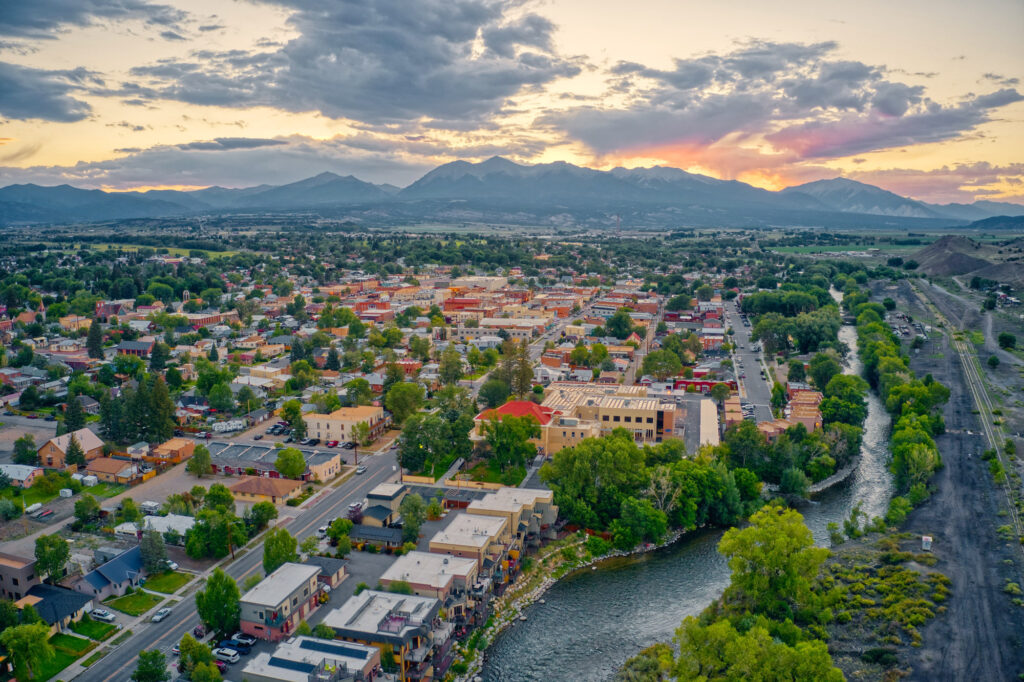
A 152-mile stretch of the Arkansas River, the AHRA is recognized as one of the nation’s most popular whitewater rafting and kayaking locations. AHRA visitors enjoy camping, hiking, picnicking, wildlife watching, mountain biking, rock climbing and even gold panning along the river’s shores, deep canyons, broad valleys and towering mountain peaks found within the upper Arkansas River Valley.
Protecting the lands, waters and quality of life of Central Colorado as communities face pressure and rapid growth.
Western Colorado University’s Center for Public Lands is a hub for cross-boundary land management and study. This training and resource center brings together students, land managers, and communities with a goal to develop creative responses to contemporary land management challenges. It’s an educational and community-serving institution working at the nexus of service, science and scholarship.
Coldharbour Institute advances regenerative practices to improve the health of working agricultural lands and watersheds through education, research, and applied practices.
Greater Arkansas River Nature Association (GARNA)
GARNA connects people with nature through inclusive educational programs, community engagement, and effective stewardship initiatives. It serves diverse residents, visitors, youth, and families across the Upper Arkansas River Valley, promoting environmental awareness, responsibility, and sustainable practices through strong partnerships and an inclusive culture.
The Lake Fork Valley Conservancy protects, enhances, and advocates for the natural integrity of the Lake Fork of the Gunnison River Basin. It achieves this through community-driven conservation, research, education, and responsible stewardship.
Leadville National Fish Hatchery
Established in 1889, the Leadville National Fish Hatchery is the second oldest federally operated fish hatchery in operation today. It currently rears greenback cutthroat trout, Hayden Creek cutthroat trout, and rainbow trout to fill needs across Colorado. These fish help to replenish and encourage sustainable trout populations and provide angling opportunities for recreational users. As Colorado’s aquatic habitat changes from natural or human influences, the natural production of fish declines. The stocking of fish is one of the many management strategies used by biologists to help replenish these populations for years to come.
Mt. Shavano works together with the other 17 hatcheries operated by Colorado Parks and Wildlife to breed, hatch, rear and stock over 90 million fish per year. Many of the fish produced are to enhance angling opportunities, while others serve a critical role in native species recovery efforts. Colorado fish hatcheries support a robust angling pasttime, which annually contributes 1.9 billion dollars to our state’s economy.